

No single glove is right for every job. The practical answer to how to choose PPE for a workplace in the UAE is to match each item to the hazards, tasks and people identified in a workplace risk assessment, then consider fit and compatibility with other equipment. A glove suited to cut hazards may not protect against chemicals, heat or electrical risks.
It’s understandable to want a clear, reliable choice, especially when teams work across different tasks and conditions. This guide explains how to assess hazards, select certified PPE for industry needs, and weigh fit, comfort, compatibility and durability. You’ll also learn why PPE requirements can differ between departments and why equipment should be inspected and maintained as work changes. The aim is practical: protect people with equipment they can use correctly throughout the task.
Key Takeaways
- Match each PPE item to the hazards and tasks identified in the workplace risk assessment; one type of glove cannot address every risk.
- Choose certified equipment that fits the relevant workplace requirements, and replace PPE that is damaged or no longer safe to use.
- Consider sector-specific exposures, such as noise, sparks, falling objects, vehicle movement, and hazardous substances.
- Check fit, comfort, and compatibility with other equipment so workers can wear PPE correctly throughout the task.
- Train workers to use, inspect, clean, store, and replace their protective equipment appropriately.
Assessing workplace tasks and hazards before selecting PPE
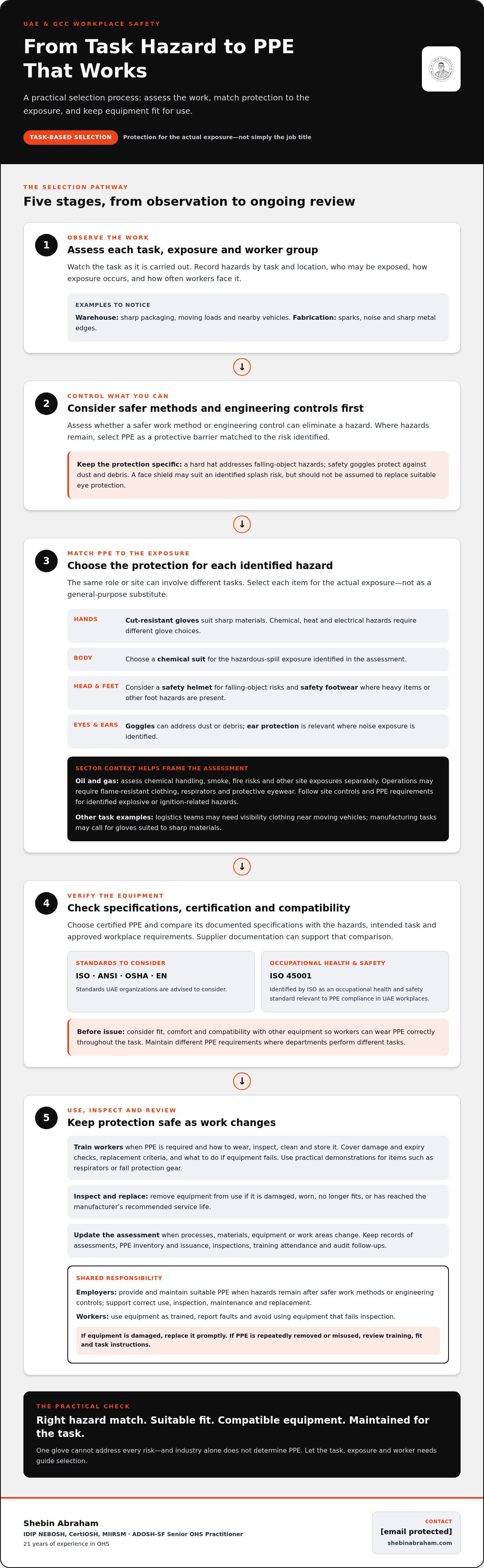
To assess workplace hazards in the UAE, examine each task, the exposure it creates and the people performing it. Then match PPE to those risks, such as chemical contact, falling objects, dust or loud noise. This task-based assessment shows how to choose PPE for a workplace in the UAE: select protection for the actual exposure, not simply the job title.
Start by observing the work as it is carried out. A warehouse worker may handle sharp packaging, move loads, and work near vehicles during one shift. A fabrication worker may encounter sparks, noise, and sharp metal edges. Record hazards by task and location, then consider how often workers face them and how exposure occurs. Employers should update assessments when processes, materials, equipment, or work areas change.
Also consider whether safer work methods or engineering controls can eliminate a hazard. Where hazards remain, PPE provides a protective barrier matched to the identified risk. For example, a hard hat addresses falling-object hazards, while safety goggles protect against dust and debris. A face shield may be appropriate for identified splash risks, but should not be assumed to replace suitable eye protection.
- Hands: Match gloves to the specific hazard. Cut-resistant gloves suit sharp materials; chemical, heat, and electrical hazards require different glove choices.
- Body: A chemical suit can provide a barrier against hazardous spills. Choose it for the exposure identified in the assessment.
- Head and feet: Consider a safety helmet for falling-object risks and safety footwear where heavy items or other foot hazards are present.
- Eyes and hearing: Goggles can address dust or debris, while ear protection is relevant where noise exposure is identified.
Oil and gas work needs task-specific assessment. Consider chemical handling, smoke, fire risks and other site exposures separately rather than treating the whole site as one hazard. UAE oil and gas operations may require flame-resistant clothing, respirators and protective eyewear. If an assessment identifies explosive or ignition-related hazards, follow the site’s hazard controls and PPE requirements. Ordinary clothing or a general-purpose glove cannot be assumed suitable.
Industry helps frame the assessment, but does not determine PPE on its own. Construction, manufacturing, logistics and marine operations can involve different tasks, even within the same sector. A logistics team may need visibility clothing near moving vehicles, while a manufacturing task may call for gloves suited to sharp materials. Consider the task, exposure and worker needs together, and replace equipment that is damaged or no longer fit for use.
Certified PPE and employer responsibilities
UAE employers should provide suitable PPE when workplace hazards remain after safer work methods or engineering controls. They must also support its correct use, inspection, maintenance and replacement.
Employer and Employee PPE Responsibilities
Employers are responsible for providing and maintaining suitable equipment; workers must use it as trained and report faults. This shared responsibility matters because even certified equipment cannot protect someone if it is damaged, unsuitable or worn incorrectly. Make PPE expectations part of workplace culture, rather than treating issuance as the end of the process.
Keep practical records of hazard assessments, PPE inventory and issuance, inspection reports, training attendance and audit follow-ups. For example, a logistics team working near vehicles needs clear instructions on its assigned visibility equipment. Workers should follow those instructions, report damage and avoid using equipment that fails inspection. Supervisors can use records to spot recurring fit or maintenance issues.
Risks of Failing to Provide or Use PPE
Failure to provide or use required PPE exposes workers to the hazards the equipment is meant to control. In Dubai, non-compliance with PPE regulations can result in fines, penalties and legal consequences for employers. The operational risk matters too: an injury can interrupt work and affect the people and teams involved.
Address problems through clear responsibilities and timely action. If a worker’s equipment is damaged, replace it promptly rather than allowing continued use. If workers repeatedly remove or misuse PPE, review the training, fit and task instructions. This addresses the cause instead of relying only on reminders or disciplinary measures.
Standards, Training, and PPE Maintenance
Choose certified PPE and match its documented specifications to the hazards and intended task. ISO, ANSI, OSHA, and EN standards are among the standards UAE organizations are advised to consider. The International Organization for Standardization (ISO) identifies ISO 45001 as an occupational health and safety standard relevant to PPE compliance in UAE workplaces.
Supplier documentation can help compare product specifications with approved workplace requirements. Keep procurement records connected to the assessment, intended use, user groups and approved specifications. Clear records also help maintain consistent choices across departments while allowing different tasks to have different PPE requirements.
Train workers on when PPE is required, how to wear and inspect it, and how to clean and store it. Cover damage and expiry checks, replacement criteria and what to do if equipment fails. Safety induction should include these instructions, with practical demonstrations for equipment such as respirators or fall protection gear.
Inspect PPE regularly and replace equipment that is damaged, worn, no longer fits, or has reached the manufacturer’s recommended service life. For site teams aligning PPE records with wider controls, workplace OHS compliance guidance can help connect responsibilities with day-to-day practice.
Industry-specific PPE for oil and gas, construction, manufacturing, and utilities
Industry shapes the hazards workers face, but each task still matters. Select PPE for the actual exposure and work setting.
Industry-Specific Risks and PPE
Industry-specific PPE means matching equipment to each sector’s hazards and work practices. Similar job titles can involve different exposures across UAE workplaces, so assess the actual task before choosing equipment.
Construction and scaffolding workers may need helmets, gloves and fall protection. Consider the task: handling materials can expose hands to cuts, while work at height creates a fall hazard. Roadwork and construction near moving vehicles may also call for reflective vests to improve visibility. The site assessment should account for these risks alongside applicable regulations and work procedures.
Oil and gas operations may require flame-resistant clothing, respirators and protective eyewear. Match these categories to the exposure identified for each task, such as inhalation hazards or fire risks. In manufacturing and fabrication, workers may need ear protection, goggles and cut-resistant gloves. The right combination depends on the process: welding can involve sparks, while metal handling can create sharp-edge hazards.
Utilities work calls for careful attention to electrical dangers and other task-specific exposures. Identify the work activity and surrounding risks before selecting protective equipment. Do not assume one set of PPE suits maintenance, field operations and other duties. Changes to tools, materials or work areas can alter both the hazards and the equipment needed.
Common PPE Across UAE Industries
Common PPE is used across sectors, but the right equipment depends on each workplace’s hazards. Shared equipment can be a useful starting point, not a default choice for every task.
- Head protection: Safety helmets can protect against impact, including falling-object hazards on construction and oil and gas sites.
- Eye protection: Goggles can address dust and sparks, including exposures in factories and welding areas.
- Hand protection: Gloves should match the hazard, such as cuts, chemicals, or heat.
- Foot protection: Safety shoes can help protect against heavy objects in construction and logistics.
- Hearing and visibility: Earplugs or specialised earmuffs suit high-noise settings; reflective vests support visibility near vehicles.
Hospitality and food-industry tasks also call for exposure-based choices. Assess cleaning duties for chemical contact and food preparation for cutting hazards, for example. Select suitable hand or eye protection for the task, and consider whether equipment interferes with other required work practices. Do not automatically assign industrial PPE to every role.
Compare hazards, tasks and work environments before standardising PPE across departments. This keeps shared equipment practical while preserving task-specific choices.
PPE fit, comfort, and worker training
A poorly fitting respirator may not protect its wearer as intended. Fit, comfort and compatibility affect whether workers can wear safety equipment correctly throughout a task. In UAE outdoor environments, lightweight, breathable PPE may be more comfortable during long shifts, but it still needs to protect against the identified hazard.
Assess fit on the person who will use the equipment, not only against a product description. UAE employers should provide PPE in multiple sizes because poor fit can reduce protection and discourage use. Check whether a helmet stays secure during normal movement, goggles sit correctly, and gloves allow the required grip. For respirators and fall protection gear, include fit testing in selection.
Compatibility matters when workers wear several items together. Goggles and a respirator, for example, should fit together without disrupting their intended use. A helmet, hearing protection and eye protection may also need to be worn at the same time. Test the full combination in practical conditions rather than assessing each item in isolation.
- Fit: Check each worker’s size and whether equipment stays correctly positioned during the task.
- Comfort: Consider weight, breathability, movement, and the conditions of the work environment.
- Compatibility: Assess how each item works alongside other equipment worn for the same task.
- Durability: Inspect PPE for wear and damage, and replace it when it becomes unsafe.
Comfort should support proper use, not override protection. Workers handling materials outdoors in the UAE may prefer breathable clothing, but the PPE selected must still address the task’s identified hazards. Electrical work also requires protection appropriate to its assessed risks. A comfortable general-purpose glove should not be treated as suitable for every electrical or industrial exposure.
Training turns equipment selection into consistent workplace practice. Show workers when PPE is required, how to put it on and how to inspect it. Demonstrate cleaning and storage procedures using the equipment they actually wear. Explain how to recognise damage, check expiry information and report equipment failure. Include these instructions in safety induction and reinforce them when tasks or equipment change.
A metal fabrication company in the UAE reported a 70% reduction in hand injuries within three months after changing glove types, providing training, and introducing PPE inspections. The example links fit-for-task selection with instruction and oversight. Workers need to understand why a glove suits a specific hazard, how to wear it, and when to stop using it. Employers can use inspection findings and worker feedback to identify fit problems, maintain suitable equipment, and improve training.
PPE selection principles: protection, compatibility, comfort, and durability
Effective PPE addresses the task’s hazards and works alongside other controls. Use the assessment to evaluate protection, compatibility, comfort and service life.
Protection and Compatibility in PPE Selection
Protection means choosing equipment designed for a specific exposure; compatibility means items work together when worn. Both matter because combining suitable items incorrectly can interfere with their fit or use.
For example, check whether a respirator fits properly with safety goggles and a helmet. Confirm that gloves let workers handle tools while providing the protection required for the task. Select visibility clothing where moving vehicles create a visibility concern. Treat each combination as a system, not a collection of independent products.
Risk Assessments for PPE Selection
A workplace risk assessment identifies hazards and helps determine suitable protective equipment. UAE companies are legally required to conduct workplace risk assessments, making them the foundation of PPE decisions.
Review the task, exposure, work area and people affected. A department handling dust may need respiratory protection, while another working near vehicles may need visibility clothing. Reassess after operational changes, such as new materials or equipment, to keep PPE suitable for current conditions.
Choose PPE by matching the hazard to the equipment’s protective purpose. Respirators or basic dust masks depend on the workplace risk. Helmets address head hazards; safety footwear suits identified foot hazards. Gloves must suit the exposure, rather than being treated as a universal option. Specifications may differ between departments because their tasks and hazards differ.
- Protection: Confirm the equipment addresses the exposure identified in the assessment.
- Compatibility: Consider how helmets, eye protection, and respiratory equipment fit together.
- Comfort: Test equipment during representative tasks, including outdoor work in UAE heat.
- Durability: Consider expected use, inspection needs, and access to replacement parts.
Common selection mistakes include buying PPE by job title alone, assuming one glove suits every hazard, and overlooking compatibility. Standardising equipment across departments without considering different specifications is another risk. These choices can leave workers with gear that does not match the task, fits poorly or discourages correct use.
Connect procurement decisions to workplace safety records. Record approved specifications, intended uses, user groups and estimated quantities. Separate approved items from requirements still under review when preparing purchasing information. These details help clarify the workplace need and reduce confusion during selection.
When several departments need coordinated PPE decisions, OHS Services can support risk-based selection and workplace compliance. Discuss PPE selection support when your assessment needs to be translated into clear equipment requirements.
Shebin Abraham: OHS Services
Shebin Abraham provides OHS Services to help UAE workplaces connect PPE decisions with practical safety management. Turn to this support when a risk assessment, task requirements or applicable workplace standards need clearer interpretation and oversight.
His work includes Freelance HSE Service, Freelance ADOSH-SF OHS consulting, and Trakhees OHS consulting. These advisory services can help organizations address OHS compliance requirements and translate identified hazards into sound workplace controls. Shebin Abraham holds IDIP NEBOSH, CertIOSH, and MIIRSM credentials, is an ADOSH-SF Senior OHS Practitioner, and has 21 years of OHS experience.
For a practical discussion about workplace OHS support, contact Shebin Abraham.
Make PPE Decisions Part of Everyday Safety
A sound PPE decision should continue to serve workers as tasks and site conditions evolve. Build a review into operational changes, such as new materials, revised work methods or different equipment. Worker feedback can also reveal practical issues a written assessment may miss, including difficulty using several items together.
Ongoing attention turns PPE selection into a working safety practice, not a one-time purchasing choice. If you’re deciding how to choose PPE for a workplace in the UAE, keep equipment aligned with current tasks and the people carrying them out. Clear advice can help translate workplace risks into consistent decisions and usable procedures.
For support connecting PPE decisions with workplace safety management, contact Shebin Abraham about PPE advice. Take the next step with care, and keep the focus where it belongs: on protecting the people doing the work.
Frequently Asked Questions
Can one type of glove be used for every job?
No. Gloves protect against different hazards, so one type cannot suit every task. A worker handling sharp sheet metal needs different protection from someone handling chemicals or hot materials. Electrical hazards also require task-appropriate hand protection. Before assigning gloves, consider the material, contact method, required grip and other equipment worn. If workers move between tasks, make sure suitable gloves are available for each activity.
Does every company in the UAE need PPE?
Not every worker needs the same PPE, but employers should provide suitable equipment when hazards remain after safer work methods or engineering controls. An office role without an identified exposure may have different needs from warehouse handling or industrial maintenance. Assess actual work activities, including occasional duties and site visits, to determine who needs protective equipment and where it must be used.
How Do Employers Choose the Right PPE?
Start with the specific task and the hazard it presents, then select equipment designed for that exposure. Consider the worker’s size, the work environment and whether several items must be worn together. For example, confirm that eye protection remains usable with a respirator. Review product specifications against the approved workplace requirement, and involve workers in practical trials before setting a department standard.
How can a business avoid buying the wrong PPE?
Prepare a purchasing specification from the workplace assessment before requesting a quotation. Include PPE categories, intended uses, user groups, estimated quantities, approved specifications and the UAE delivery destination. Separate approved requirements clearly from items still under review. For example, a request for gloves should describe the task and hazard, not simply ask for general hand protection. Keep the final specification with purchasing records.
How often should PPE be replaced?
Replace PPE when it is damaged, fails inspection, no longer fits or reaches the manufacturer’s recommended service life. Inspect it before every shift so problems are found before use. A torn glove, cracked helmet or respirator that no longer fits should not remain in service. Replacement timing depends on equipment condition, exposure, care and manufacturer guidance, not one universal schedule.
How should a business decide what PPE employees need?
Base the decision on the employee’s actual duties, exposure and work location. A maintenance worker entering a noisy plant may need different equipment from a colleague doing administrative tasks in the same company. Include temporary tasks, cleaning, material handling and movement through hazard zones. Review requirements when processes or equipment change, and record which employee groups receive each PPE specification.
What UAE laws and regulations govern workplace PPE selection and use?
The UAE Labour Law requires employers to provide appropriate PPE to workers at risk, and employers are responsible for maintaining it and training staff in correct use. MOHRE Guidelines are relevant to workplace equipment. Additional sector guidance may come from bodies such as ADOSH-SF, Dubai Municipality, Civil Defence Authorities and Free Zone Authorities. Applicable requirements can depend on the work activity and jurisdiction.
What PPE must UAE employers provide to workers, and who pays for it?
Employers should provide PPE suited to the hazards that remain in a worker’s role, such as protective footwear, gloves, helmets, eye protection or respiratory equipment where the assessment identifies a need. The UAE Labour Law requires employers to provide appropriate PPE to workers at risk. Required equipment depends on the task and exposure, so a site-based worker and an office-based worker may need different provisions.


